
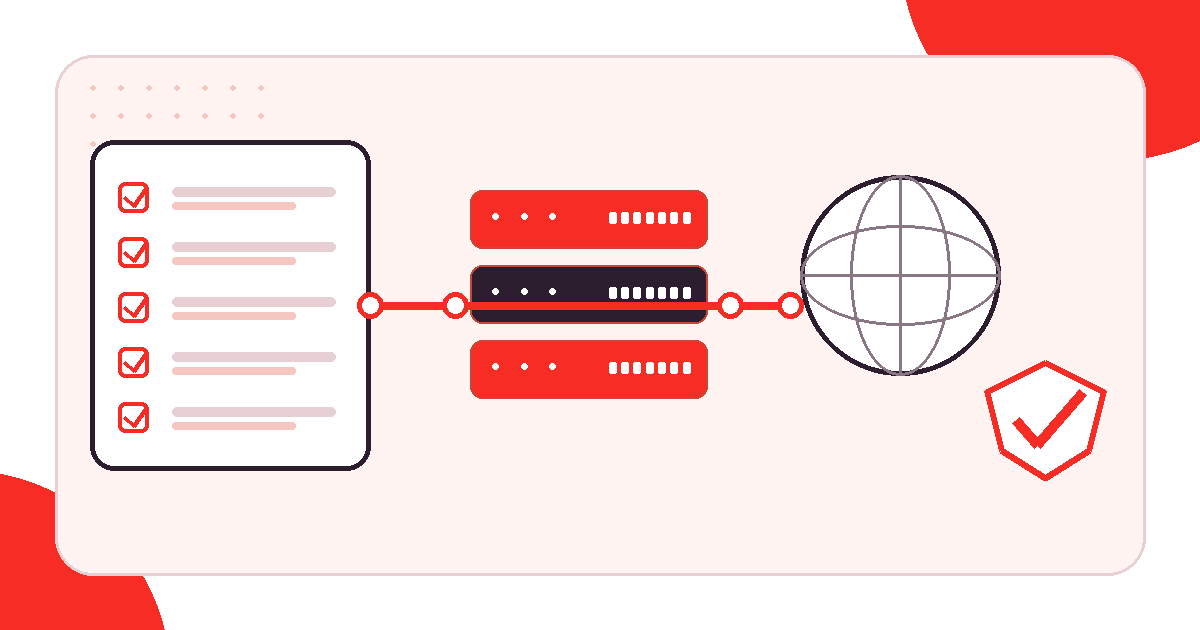
Choose a reliable proxy service by writing a precise workload, verifying who operates the network, matching its access model and protocol to the real client, confirming authentication and limits, and running a small acceptance test. Reliability means the route is understandable when it works and diagnosable when it fails, not merely that a provider advertises a large pool.
Scope: this guide is for provider selection after proxy basics are understood. Compare technical models in the Proxy Basics hub, then use the proxy testing guide to execute the acceptance method.
Workflow requirements: write the job before comparing plans
Name the application, authorized destination, purpose, protocol, country, session duration, request volume, concurrency, authentication, and project length. State whether the work uses public pages, an approved account, an API, or an internal system. A clear requirement prevents marketing labels from defining the project after the fact.
For example, a regional QA browser may need a small number of stable HTTP endpoints, low concurrency, credential authentication, and repeatable public-page checks. Do not copy that shape blindly: record the real requirement and its acceptable failure signal.
Access model: private, shared, static, or rotating
Ask whether the assigned IP is exclusive, shared, or selected from a pool. For rotation, document whether changes occur per request, on a timer, or through a session identifier. For static service, ask what can happen during maintenance, renewal, and replacement.
A global pool headline does not reveal relevant inventory for one country or session type. The access and rotation guide separates these decisions. Request evidence for the endpoint type the workflow actually needs.
Protocol: match the client rather than the label
Verify whether the application supports HTTP proxying, CONNECT for HTTPS destinations, SOCKS5, or only system settings. RFC 1928 defines SOCKS5, but real clients vary in DNS, authentication, and UDP support. Test the documented mode instead of assuming every port accepts every scheme.
Authentication and secret handling
Username and password access fits changing client networks. Source-IP allowlisting fits servers with stable public egress and avoids distributing a proxy password. Confirm how quickly changes take effect, whether both controls can be combined, and how credentials are rotated after exposure.
Keep secrets in protected configuration, redact them from tickets and logs, and never treat repeated authentication attempts as a harmless test. A reliable provider should explain a 407 at the proxy boundary without requesting secrets in plain text.
Location and ownership evidence
Choose the country or region the authorized workflow needs, then test it in the actual destination. Registry ownership and geolocation are different forms of evidence; city databases can disagree or update slowly. Ask how the provider sources residential or device-based routes and whether participant consent is documented.
Also account for distance. A nearby endpoint can be more responsive than a distant one, while account settings, language, and saved location can influence a site independently of the exit IP.
Trial validation: run a small, repeatable acceptance test
- Start with the smallest representative endpoint set.
- Confirm assignment, protocol, authentication, and documented limits.
- Record a direct baseline and the observed proxy exit.
- Keep TLS certificate validation enabled.
- Perform one authorized destination action at conservative volume.
- Repeat across several time windows and classify errors.
- Ask support one specific question without sharing secrets.
Expected observation: the route authenticates consistently, follows the promised session rule, and produces reproducible evidence. A 403 or 429 from the target may show destination policy or rate control even while the proxy is online; competent support should distinguish those layers.
Selection limits: no provider can guarantee acceptance by every destination. Review privacy, acceptable-use, bandwidth, concurrency, replacement, and support terms; obtain authorization and respect rate limits before scaling.
Compare the current commercial terms after the trial plan is written
Once the requirement and pass/fail method are explicit, review current proxy pricing for the smallest matching option. Current product pages and service terms are the source for inventory, policies, and commercial details; scale only after the representative route passes.