
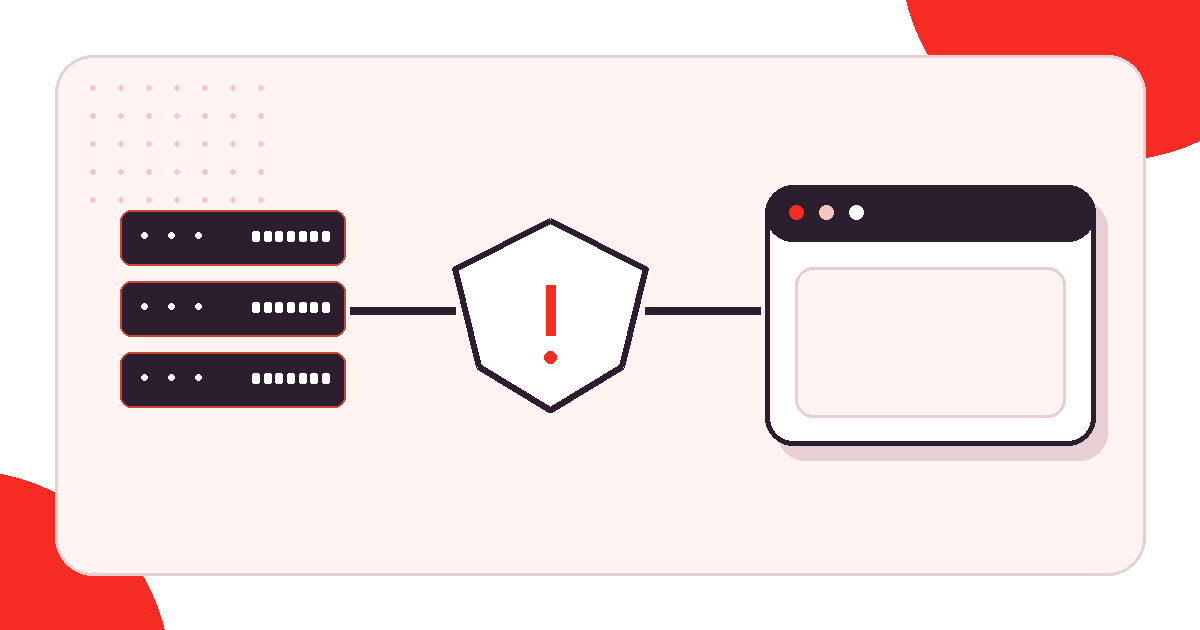
The central risk of a free proxy server is uncertainty. A public listing may not identify who operates the endpoint, whether it was intentionally opened, what it logs, whether it modifies traffic, who else uses the address, or when it will disappear. A successful IP check proves only that one request used an exit; it does not establish trust.
Scope: this is a risk and evaluation guide for unknown public endpoints. For a direct service-model comparison, read free versus private proxies; for the network basics behind the risk, use the Proxy Basics hub.
Operator ownership: a listing is not accountability
Free-proxy directories can copy entries from other lists or discover open ports. The directory may have no relationship with the server owner. An address might belong to a deliberate public service, a temporary test server, a compromised device, or a misconfigured company system. Those cases have different security and legal consequences.
Look for an identifiable operator, service terms, privacy information, incident contact, and a clear explanation of why the endpoint is public. Treat ownership as unverified until those facts connect the operator to the server. A directory’s general policy does not necessarily describe every listed machine.
Logging and data retention
A relay can log client addresses, destination hosts, timestamps, connection sizes, identifiers, and errors. With no accountable operator, users cannot evaluate why records exist, how long they remain, or who receives them. Even a no-logs claim needs definitions for connection, authentication, abuse, billing, and support records.
Privacy limit: never send passwords, payment details, private messages, client data, session cookies, or sensitive downloads through an unknown public proxy. Use a clean profile with no saved accounts, and do not reuse credentials if a disposable test requires any authentication.
Traffic modification and TLS warning signs
A proxy carrying plain HTTP can read or alter requests and responses, including URLs, forms, cookies, scripts, advertisements, and downloads. HTTPS reduces exposure when the client establishes end-to-end TLS and validates the destination certificate. MDN’s proxy tunneling guide explains that boundary.
Failure signal: stop on an unknown certificate issuer, hostname mismatch, changed trust chain, unexplained redirect, injected content, or unexpected download. Do not disable certificate verification or install a root certificate supplied by an unknown proxy; those actions remove the control that exposed the problem.
Reliability, congestion, and shared reputation
An endpoint open to everyone attracts scanners and high-volume automation. Load can vary from minute to minute, and prior abuse can cause destination challenges before a new user sends a first request. Addresses copied between lists also age quickly: they may be offline, moved, filtered, or serving a different protocol by the time they are tested.
Labels such as anonymous, elite, HTTPS, or SOCKS5 often reflect a narrow checker result, not a maintained service contract. Cycling through more unknown exits can make an account session less consistent and obscure whether the failure belongs to the proxy, destination policy, or request rate.
Safe evaluation for a disposable experiment
- Use a separate test profile or disposable environment with no sensitive sessions.
- Establish a direct baseline for an HTTPS page you control or may request.
- Keep certificate validation enabled and send no private data.
- Record claimed ownership, protocol, observed exit, latency, and response headers.
- Compare content and redirects with the trusted baseline.
- Repeat only a few times at a conservative rate.
- Stop on modification, TLS errors, unexplained downloads, or unclear ownership.
This process cannot prove an operator honest; it can only expose some failures. Continue with the layered proxy testing guide for exit, DNS, TLS, and destination checks. Keep evidence without storing secrets.
Use an accountable route when the workload matters
If the workflow involves accounts, client data, scheduled monitoring, stable allowlists, or support obligations, unknown ownership is already disqualifying. After documenting the protocol, location, session, and access requirements, compare current private proxy options. A paid label is not a security guarantee, so apply the same HTTPS, credential, authorization, and rate-limit controls.