
You need enough proxies to support the authorized workload’s concurrent sessions, required locations, stable account routes, allowed request rate, and failure recovery without creating unnecessary complexity. Start with one working route, measure the real task, and increase only when concurrency or geography requires it. Buying a large pool does not fix poor configuration, destination limits, or unsafe retries.
A useful proxy sizing decision is a small capacity plan, not a guess. Write down the task, destination, legal basis or permission, client software, country coverage, session length, acceptable retry behavior, and evidence that one proxy works. Then estimate count from the bottleneck that actually exists.
Start with workflow units, not raw requests
Count the units that must run at the same time: browser profiles, API workers, QA sessions, monitoring jobs, or regional comparison rows. A single user checking a French page once does not need the same pool as a scheduled multi-country test. A signed-in account workflow may need one stable route per account or team, while a public signed-out check may need one route per market.
Also separate human workflows from automated jobs. A support analyst may need reliability and continuity more than volume. A scheduled public monitoring job may need predictable pacing and evidence rows. A developer integration may be limited by one library’s connection handling before proxy count matters at all.
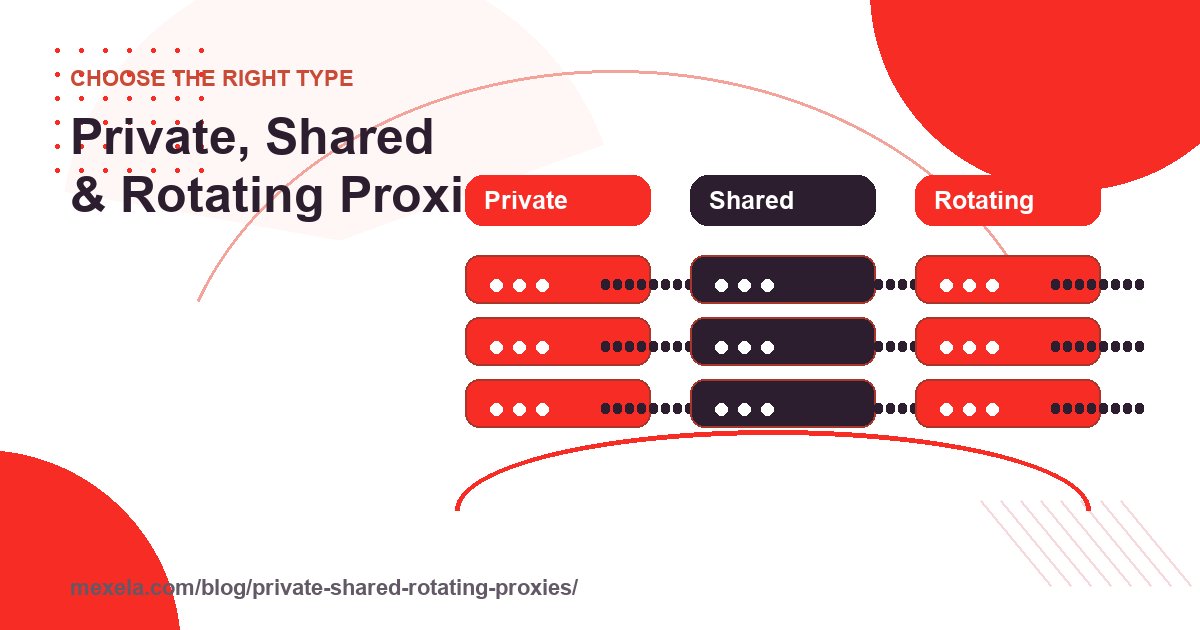
The proxy provider checklist helps separate research, QA, monitoring, and account consistency before a plan is selected. The private, shared, and rotating proxies guide explains why stable sessions and rotating exits answer different needs.
Concurrency creates the first number
If five browser profiles must run at the same time and each profile needs a separate stable exit, the starting number is five. If those profiles can run sequentially through one endpoint without losing session quality, the starting number may be one. If one endpoint has a provider connection limit, throughput limit, or destination-side pacing limit, that limit becomes part of the calculation.
Do not hide uncontrolled concurrency behind more IPs. HTTP 429 is the standard status for too many requests in HTTP semantics; see RFC 9110 on 429. Respect retry guidance, reduce volume, and prefer official APIs where available.
Locations multiply the plan only when needed
A test that compares France, Canada, and Germany needs at least one verified route per market if the observations must be simultaneous or close in time. If the test can run sequentially and each market is independent, one endpoint per market may still be enough. City-level claims require more careful design and should not be inferred from a country label.
Use the France proxy server guide and proxy location guide to define country evidence. If wrong-country results appear, diagnose with proxy geolocation mismatch before increasing inventory.
Session stability can require dedicated routes
Some workloads need continuity more than volume: account administration, allowlisted dashboards, long browser sessions, marketplace QA, or customer support checks. For those, the count often equals the number of concurrent sessions that need stable identity plus a small spare capacity for maintenance.
Other workloads are stateless and public, such as occasional checks of public pages. They may need fewer endpoints but better logging and retry discipline. The proxy authentication guide explains when IP allowlisting or username/password access changes operational sizing.
Simple sizing worksheet
| Question | Sizing effect |
|---|---|
| How many sessions must run at once? | Minimum concurrent endpoints or allowed connections |
| How many countries must be tested? | Minimum verified routes per market |
| Does each account need a stable route? | One dedicated route per active account session |
| What is the destination’s rate policy? | May reduce volume rather than increase proxies |
| What happens on failure? | Small spare capacity and a rollback plan |
For example, two analysts checking public French and Canadian pages sequentially may start with one France proxy and one Canada proxy. Ten simultaneous browser profiles for regional QA may need ten stable routes split by market. A crawler that ignores robots, terms, or rate limits should not be scaled at all.
Use the minimum quantity from your sizing worksheet in the proxy plan selector to find a listed package that covers it. Compare that package in the monthly proxy cost calculator, including setup and approximate per-address cost. This comparison prices the package; it does not guarantee throughput or destination acceptance.
Respect crawl and automation boundaries
The Robots Exclusion Protocol is defined in RFC 9309, and many platforms also publish API limits, terms, and acceptable-use rules. Proxy count should never be used to overpower a published limit or hide abusive traffic. If a destination says slow down or stop, changing IPs is the wrong fix.
Use responsible proxy use and rate limits to build retry, logging, and stop conditions. The first successful route should be tested at conservative volume before the plan expands.
Limit: more proxies cannot guarantee success, rankings, account acceptance, or legal suitability. Scaling an unverified or unauthorized workflow only makes failures harder to diagnose.
Next step
After one route passes, compare the required concurrent sessions, countries, and spare capacity with proxy pricing. Buy the smallest plan that proves the workflow, then expand from evidence.
Frequently asked questions
Is one proxy enough?
Yes, if one client or session can complete the authorized task within acceptable time and policy limits.
Do more proxies make a task faster?
Only when concurrency is the real bottleneck and the destination permits the volume. More endpoints can also create more failure modes.
How many proxies do I need for multiple countries?
At least one verified route per required country when results must be compared. Add more only for simultaneous sessions or redundancy.
Should each account use a separate proxy?
If the business process requires stable account routing, one dedicated route per active account session is easier to audit than rotation.
How much spare capacity is reasonable?
For small workflows, one spare endpoint per important market is often enough. Larger systems should size spare capacity from measured failure rates.
How should retry capacity affect the proxy count?
Start with the permitted concurrent sessions and request budget, then reserve capacity for a bounded recovery policy. An illustrative four active sessions plus one verified standby route is a five-route plan, not permission to multiply retries. Check whether sessions can share an endpoint before treating every connection as a separate required proxy.
For the related implementation or diagnosis, define bounded failover before adding spare capacity.