
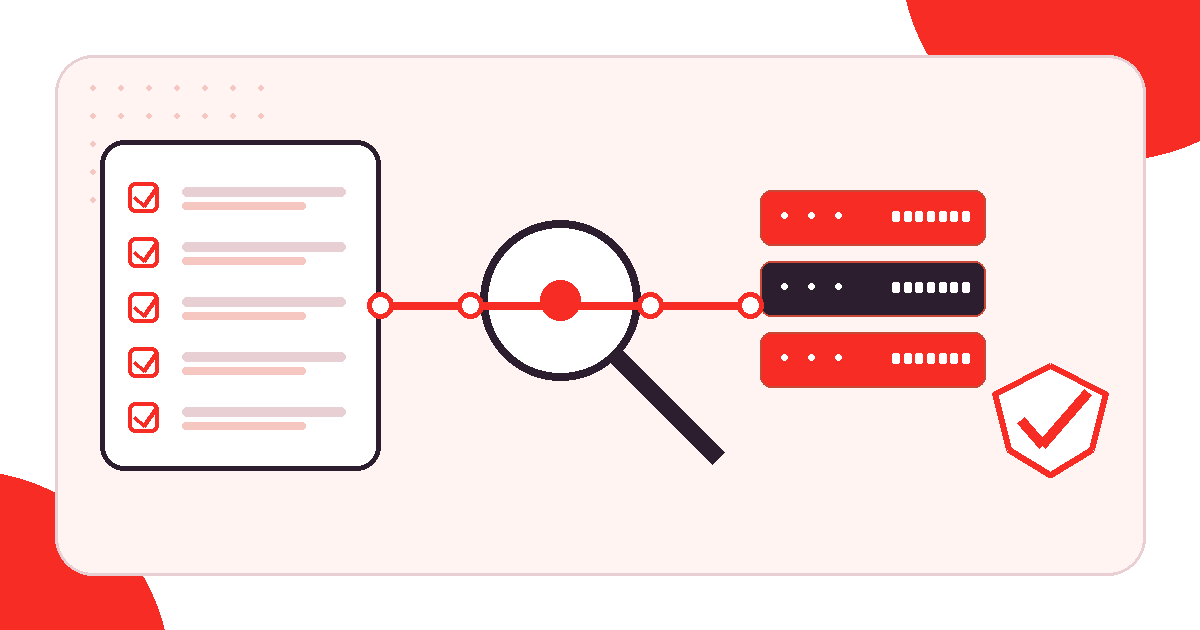
Treat every free proxy list as untrusted input. Parse each line strictly, identify the claimed protocol, test reachability with short timeouts, verify the observed exit through an approved HTTPS endpoint, keep certificate validation enabled, measure repeated latency and success, and quarantine anything that redirects, modifies content, or has unclear ownership. Never test unknown proxies with real accounts or sensitive data.
A list can contain valid servers, dead addresses, mislabeled protocols, duplicates, private IPs, malformed ports, honeypots, or systems that were never intended to be public. The goal of testing is not to convert an unknown list into a trusted business service. It is to measure behavior safely enough to decide which entries should be rejected.
Normalize the input before opening connections
Accept only documented formats such as IP:port, hostname:port, or a structured record with explicit protocol and credentials. Reject ports outside 1 through 65535, whitespace inside hosts, empty fields, unsupported schemes, and credentials in logs. Convert international domain names with a standard library rather than home-grown character replacements.
Remove exact duplicates and flag addresses from private, loopback, link-local, multicast, or documentation ranges. A public checker should not be allowed to connect to internal networks or cloud metadata services. This server-side request-forgery boundary matters whenever a user can submit a host and port.
Do not trust the protocol label
A line marked HTTPS may mean the proxy accepts TLS from the client, or it may only mean an HTTP proxy successfully tunneled an HTTPS destination. SOCKS4 and SOCKS5 have different negotiation. Test each claimed protocol with the correct client handshake and classify mismatches instead of trying random fallbacks indefinitely.
For HTTP proxies, distinguish a plain request from a CONNECT tunnel. For SOCKS5, test authentication and whether hostname resolution occurs locally or through the proxy. RFC 1928 defines SOCKS5 negotiation, while the Mexela protocol guide translates the differences into client decisions.
Use safe reachability limits
Apply short DNS, connect, handshake, and total deadlines. Limit simultaneous probes, outbound ports, response bytes, redirects, and destination hosts. A tester should not become a general network scanner or relay. Run it from an isolated environment with egress rules and no access to production secrets.
Record failure stages separately: invalid input, DNS failure, connection refused, connect timeout, protocol mismatch, authentication rejection, tunnel failure, TLS error, destination status, and response timeout. One word such as dead hides information needed to reproduce and fix the test.
Verify the observed exit with a controlled endpoint
After negotiation succeeds, request an HTTPS diagnostic endpoint you own or are permitted to use. It should return a small response containing the source address it observes and a request identifier. Compare that source with the proxy host carefully; some services use a different exit than gateway address.
The Mexela Proxy Checker can provide a manual observation. For batch testing, respect service limits and avoid sending large unknown lists to third-party tools. Build or use an endpoint intended for your volume, and do not include credentials in URLs or query strings.
Keep TLS validation enabled
The diagnostic request should validate the destination certificate and hostname normally. Reject unknown certificate authorities, expired certificates, hostname mismatches, and downgrade attempts. Do not mark an endpoint working after using an insecure option that would hide interception or misrouting.
For controlled detection, compare the certificate issuer and destination response with a trusted direct baseline. A difference is not automatically malicious because networks and content-delivery systems vary, but an unexplained trust-chain change requires investigation before any further use.
Measure latency as a distribution
One request can be unusually fast or slow. Run a small number of spaced checks and record connect time, tunnel time, TLS time, time to first byte, total time, and status. Calculate median and a high percentile only when enough samples exist. Keep failures in the denominator rather than reporting speed only for successes.
Test from the environment that will use the proxy. A list tested from one country or cloud region may behave differently from a laptop elsewhere. Do not create heavy load on unknown systems. A few conservative probes are sufficient to reject unstable entries; they are not permission for benchmarking.
Check stability without building a dependency
Repeat the small test after an hour and later in the day. Record whether the same endpoint remains reachable, whether the exit changes, and whether errors cluster by time. A proxy that works once and disappears is unsuitable for any session that requires continuity.
Free endpoints can change ownership or behavior after testing. Passing today is not a certification for tomorrow. Set a short expiration on results and retest before every disposable experiment. For business workflows, controlled service access is more efficient than maintaining a constantly decaying public list.
Location and anonymity labels need interpretation
IP geolocation providers can disagree because their databases update on different schedules. Record the database and time rather than declaring one city as absolute truth. A proxy may also forward headers that reveal an earlier client address, but header absence does not prove anonymity because many other identifiers exist.
Use neutral language such as observed exit, reported country, and forwarded headers. The proxy testing guide explains why IP, DNS, WebRTC, account, and browser identity are separate layers.
Store results without storing secrets
Keep a normalized endpoint identifier, claimed protocol, test time, result stage, observed exit, timings, and a short error code. Redact passwords, tokens, authorization headers, cookies, and response bodies. Protect the report because a working list can itself become sensitive infrastructure information.
The OWASP Logging Cheat Sheet recommends deliberate event selection and protection of sensitive data. Apply the same discipline to proxy diagnostics instead of dumping complete client objects when a request fails.
A practical acceptance checklist
- Syntax and address class are valid.
- The claimed protocol negotiates correctly.
- Authentication behavior is understood.
- An approved HTTPS endpoint loads with valid TLS.
- The observed exit is recorded.
- Latency and success remain usable across repeated small tests.
- No redirects, content injection, or unexpected downloads appear.
- Ownership and permission are sufficiently clear for the intended test.
Anything that fails a security check should be rejected, not moved to a retry queue forever. For common network failures, use the proxy error guide. For the risks behind unknown endpoints, read the free proxy server risk analysis.
Know when to stop testing free lists
If the project needs stable sessions, controlled authentication, support, reproducible performance, or a defined provider, public lists are the wrong input. The engineering time spent parsing, retesting, and replacing them will continue. A small accountable plan usually produces better evidence and lower operational risk.
Compare current options on the proxy pricing page, choose the smallest suitable quantity, and test the real authorized application. A provider relationship does not remove the need for verification, but it gives the results a stable context.
Frequently asked questions
How do I know whether a free proxy is working?
Verify protocol negotiation, request an approved HTTPS diagnostic page, confirm the observed exit, and record repeated success and timing with certificate validation enabled.
Can I paste a proxy list into any online checker?
Only if the checker is designed for that volume and its privacy terms are acceptable. Lists can contain sensitive credentials or internal addresses, so local validation is safer.
What timeout should I use?
Use separate short connect and total deadlines appropriate to your environment. The goal is to reject stalled endpoints without creating large simultaneous load.
Does an elite label mean a proxy is anonymous?
No. Labels vary by checker and often refer only to selected forwarding headers. They do not prove ownership, logging practices, browser privacy, or destination acceptance.
How often should a free proxy list be retested?
Results expire quickly. Retest before each harmless experiment, and do not rely on public endpoints for sessions or production work that require continuity.
Bottom line: validate a free proxy list like hostile network input. Strict parsing, bounded connections, normal TLS, controlled destinations, repeated measurements, and aggressive rejection are essential—and passing those checks still does not establish trust.