Fundamentals
Proxy Basics
Learn the core proxy types, protocols, and decisions before you configure a service.

The practical proxy knowledge base
Independent-minded, technically accurate guides to proxy types, protocols, authentication, configuration, responsible data collection, and troubleshooting.
Make a requirements-first choice
Compare exclusive or shared access, fixed or rotating IP behavior, protocol support, location, and authentication before you order. The checklist turns those terms into a controlled test.
START WITH THE RIGHT PATH
Choose a focused route for fundamentals, implementation, diagnostics, or regional testing.
Fundamentals
Learn the core proxy types, protocols, and decisions before you configure a service.
Implementation
Configure authentication, clients, and integrations with practical developer guidance.
Diagnostics
Test routes methodically and isolate authentication, network, and destination failures.
Regional research
Compare regional experiences responsibly with repeatable location and platform checks.
BUY PROXIES
Start with dedicated private proxies for stable IPv4 access or shared proxies for budget-sensitive work.
PROXY OPERATIONS FIELD NOTES
Verify proxy routes, compare regional results, and diagnose failures without confusing connectivity with destination behavior.

Set bounded request rates, respect published rules, and stop cleanly when a target signals limits.

Keep country, language, device, and route evidence consistent for reproducible comparisons.

Separate authentication, protocol, network, and destination failures before retrying.
Clear answers, real trade-offs, practical steps.

Configure Axios proxy routing in Node.js with explicit settings, authentication, environment variables, custom agents, safe verification, and layered debugging.

Configure a Playwright proxy in TypeScript with safer authentication, global or per-context routing, bypass rules, controlled checks, and geo-QA safeguards.

Configure a Python Requests proxy with safer credential handling, explicit timeouts, reusable sessions, SOCKS support, and a controlled verification workflow.

Configure a cURL proxy with HTTP or SOCKS5, separate proxy credentials safely, control environment variables and bypass rules, and verify each network hop.

Run a proxy leak test that separates the HTTP exit IP, DNS resolver path, WebRTC candidates, IPv6 route, browser scope, and expected result matrix.

Compare IPv4 and IPv6 proxies by address format, supply, destination compatibility, DNS, dual-stack behavior, allowlists, reputation signals, and testing.
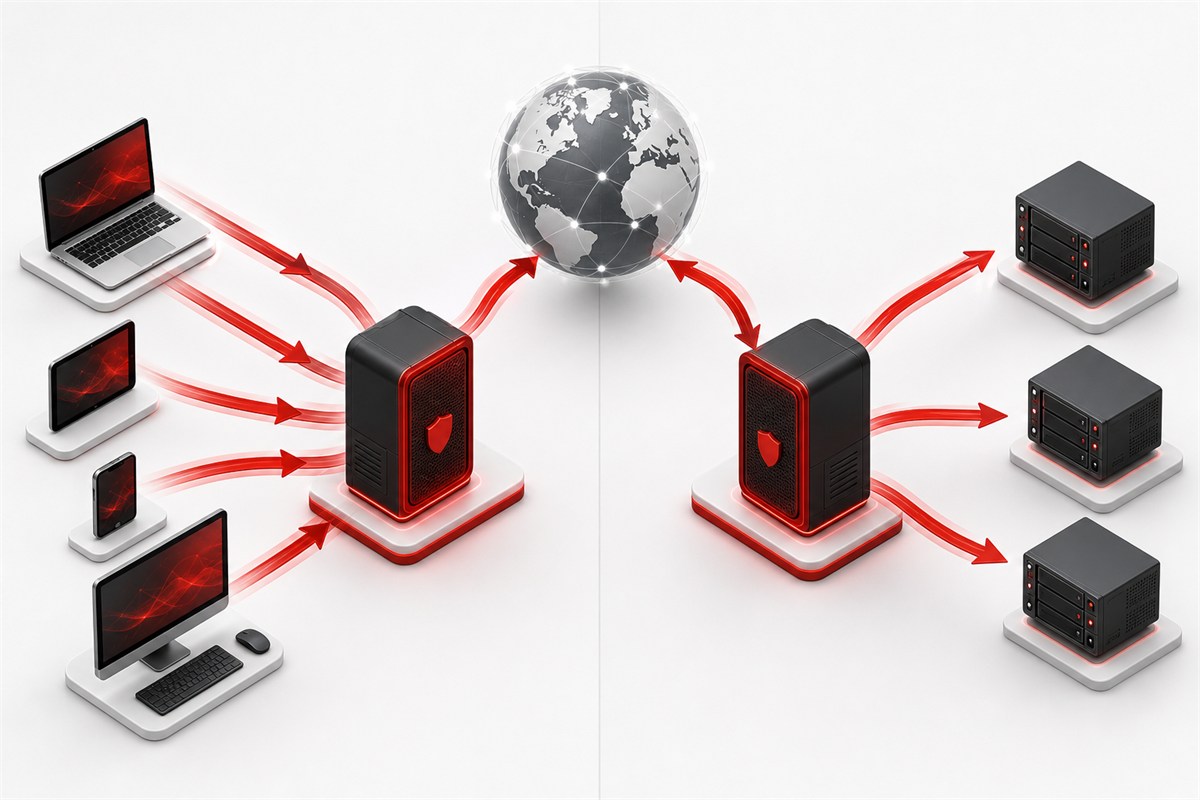
Understand forward and reverse proxies through traffic direction, configuration ownership, request paths, headers, TLS boundaries, use cases, and verification.

Compare a proxy and a VPN by routing scope, encryption boundary, DNS behavior, privacy limits, application support, and a repeatable verification process.

Configure Go net/http with ProxyFromEnvironment or an explicit ProxyURL, handle credentials, apply NO_PROXY, reuse transports, verify the exit, and diagnose CONNECT failures.

Configure a proxy for C# HttpClient with HttpClientHandler and WebProxy, separate proxy credentials, apply narrow bypass rules, reuse connections, and verify the route.